


Louise Glück was a pivotal voice in American poetry for the last few decades. She received every esteem a poet can earn: The Nobel Prize in Literature, The Pulitzer Prize for Poetry, and Poet Laureate of the United States, among others. But what is most notable about her is that she brought a new poetic voice to the forefront: not confessional, but mythic; sparse but also poignant.
In 2008, I was lucky enough to be one of Louise Glück’s poetry students at Boston University’s MFA program.
I remember taking the T to her Cambridge apartment, the breakable vases of dried flowers from her garden everywhere, all of us crowded on the couch and floor hoping not to be the one dumb enough to bump something over.
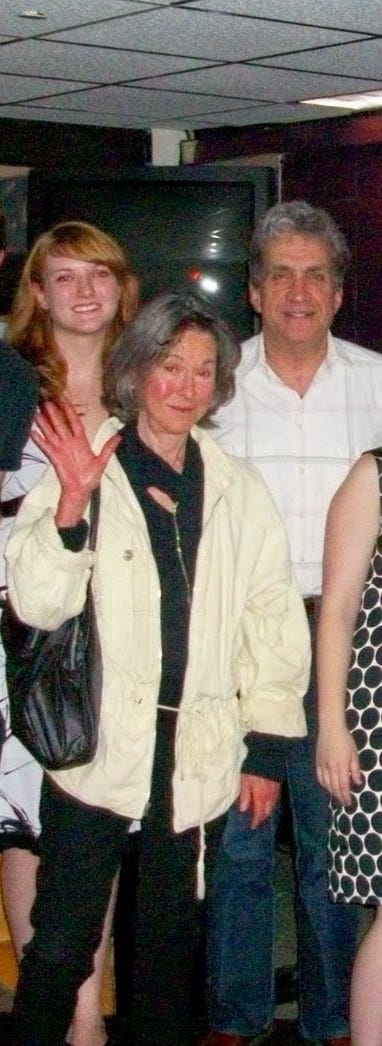
We were all (I think–or at least I was) a little afraid of her, this tiny steel-gray haired woman (already famous), so cutting and dry with her poetry and her remarks (but always a bit of sly humor there).
She had pink Himalayan sea-salt on the table–I hailed from Tennessee backwoods and I’d never seen that before. She used a typewriter in a windowed room. I thought she was the most elegant person I’d ever met.
She told me once in workshop that the end of one of my poems was “flaccid”–I knew it was bad from my classmates’ giggles (yes, giggles), but had to look up what it meant when I got back to the dilapidated broken-window Victorian apartment my husband and I (21 years old, newlyweds) were renting. Flaccid, added to the vocabulary. And I sure fixed that ending.
I remember her telling me a very complicated writing exercise: write from a memory (“of which you have so many,” she said), include a staircase, seven people, an insect, and darkness. I wrote and sweated and swore over that poem, and turned it in. She told me she didn’t remember giving me that exercise, but she liked the poem well enough.
Toward the end of my time at BU, I met with her for one-on-one conference at her home, over my final manuscript. She told me that she really thought that I had talent. I could’ve about fallen out on the floor to hear her say that, and that encouragement bolstered me up through many a year in my mediocre poetry-career.
Because one thing about Louise: she meant what she said. She could be just as biting and austere as her poetry, but what was so attractive about her and her writing was that it always told the truth, the plain bald-faced truth.
-
This November, if you’d like to learn more about Louise’s style and poetics, sign up for my generative writing workshop:
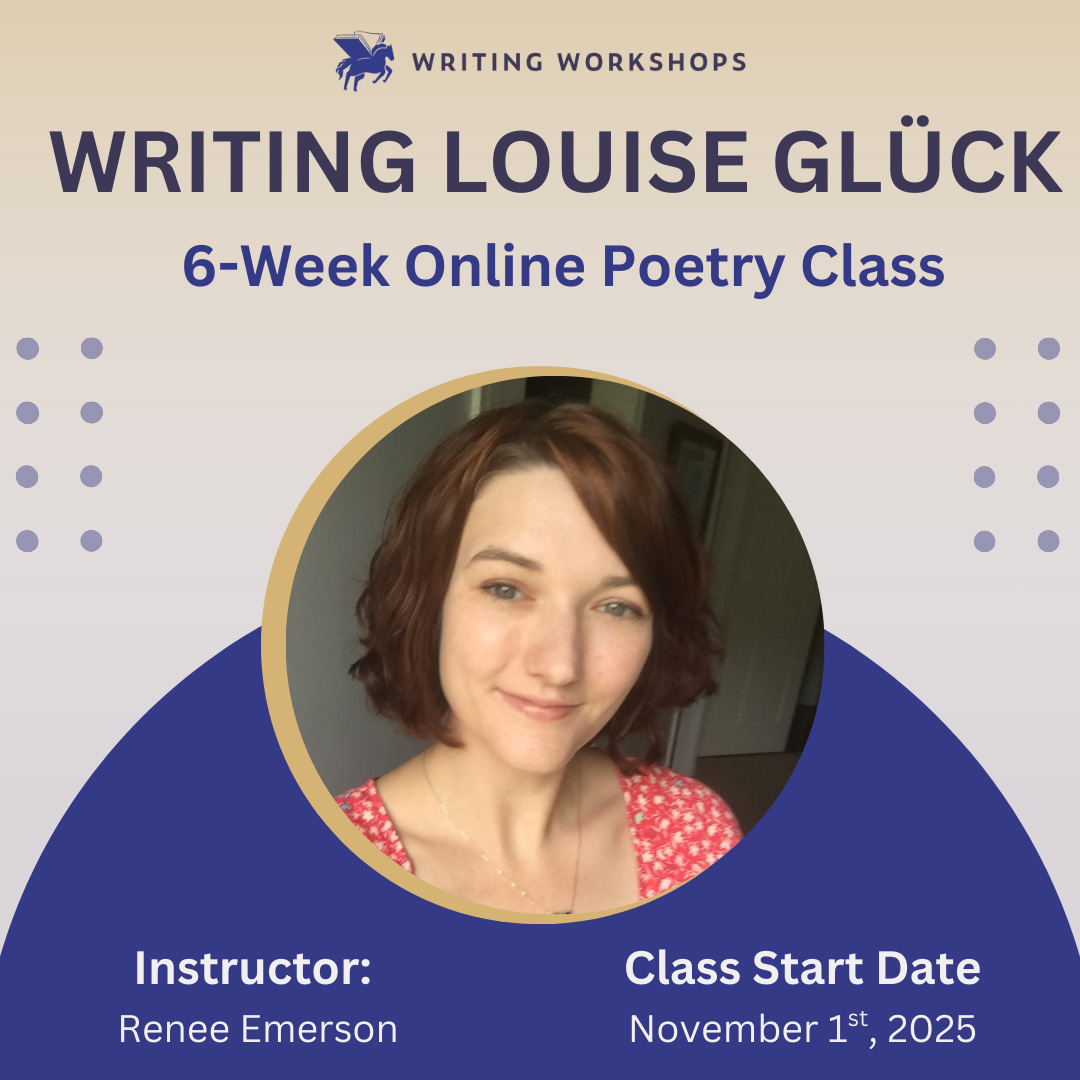
In my class, we’ll write eight poems in six weeks (you can do it!), workshop four poems, and come away with an understanding of Louise’s style.
You can register for the class at WritingWorkshops.com.
(For an interview with me and more information about the class, check out my interview “Learning from Louise Gluck”)
Ah, Renee. I too knew Louise (just a little bit and through the happenstance that I knew her ex-husband, also a writer) but she treated me like a friend and wrote two or three lovely letters to me that I cherish. I have every book she has written and will always be in awe of her talent and her down to earth kindness. So glad that you will help her light continue to shine.